
Not every septic problem belongs in the absorption field. Secure lids, watertight risers, sound baffles, clear outlet filters, and intact tank walls protect people and keep solids where the system can manage them. A pump-out often creates the safest opportunity to observe these parts, but repair scope still needs a written boundary and municipal direction when it alters the permitted system.
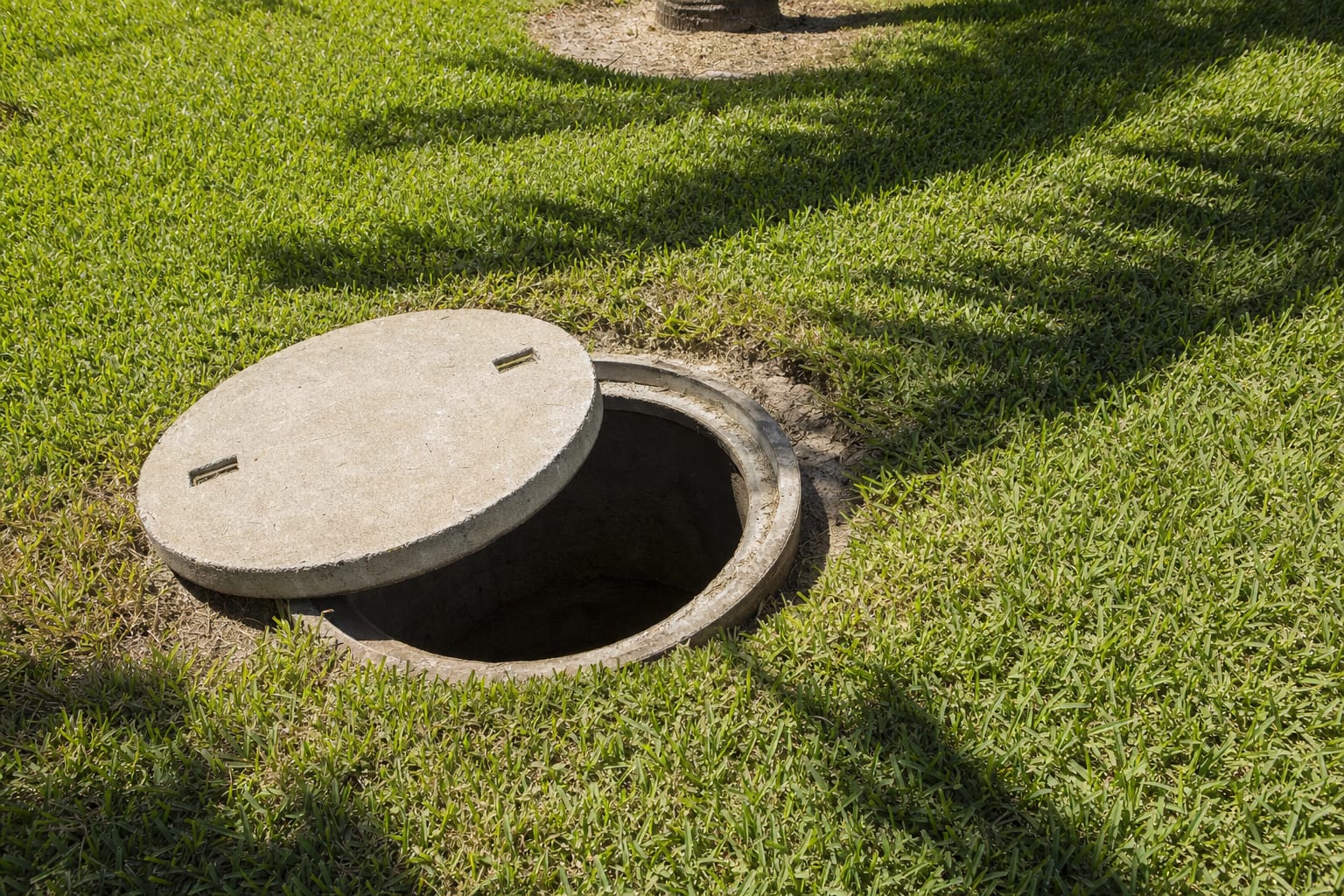
Small components prevent expensive downstream trouble
The inlet baffle directs incoming flow and limits disturbance. The outlet baffle and filter hold floating and suspended material inside the tank. A missing outlet component can feed solids to distribution piping and treatment soil. A damaged lid creates a fall hazard and can admit runoff. Each defect deserves attention for a different reason.
Symptoms alone do not name the part. Odor near a lid may come from a loose seal, while whole-house slowing may involve the outlet or field. A filter clogged with solids can create a backup even when the field still functions. Open, pump when appropriate, observe, and test before combining unrelated replacements into one quote.
Risers trade repeat digging for permanent access
A properly fitted riser brings the main service opening toward grade, reducing future locating and excavation. The lid must be secure against children and unauthorized entry, resist surface water, and remain accessible to the pump hose. A decorative cover must not create a hidden trip or prevent opening.
Ask whether the proposed riser fits the tank opening, how it seals, who restores grade, and whether the township treats the work as ordinary maintenance or a permitted modification. Do not stack loose masonry or improvise a cover over a hazardous opening.
Structural concerns need a broader decision
Visible cracking, settlement, corrosion, exposed reinforcement, or infiltration can point beyond a replaceable lid. A contractor should describe what can be seen from safe access and whether further excavation or engineering is needed. Entry into a septic tank is a confined-space hazard and is never a homeowner inspection method.
- Keep everyone away from an unsecured or broken cover.
- Do not enter a tank or lean into an unsupported opening.
- Record groundwater infiltration and return flow after pumping.
- Ask the SEO before replacing or changing a treatment tank.
Repair during pumping can reduce duplicate work
Filter cleaning and accessible lid or baffle observations naturally coincide with pump service. A separate repair crew may still be needed for structural work, excavation, electrical components, or permitted alterations. The service order should separate pumping, parts, excavation, disposal, restoration, and municipal fees rather than hiding them in one total.
Local primary sources did not provide trustworthy Lancaster repair price bands, so this site publishes none. Tank material, access, depth, water conditions, part availability, and permit scope make a property quote more useful than a national calculator.
When replacement is unnecessary
Do not replace a functioning tank solely because the access is buried or the filter needs cleaning. Do not condemn the absorption area because a damaged lid caused odor. Component repairs can be economical when the structure and field remain serviceable. The opposite also holds: a new riser does not rescue a failed field. Keep the diagnosis tied to the component.
Official references used for this page
Rules and contacts can change. These primary sources supported the statements above; check the current municipal record for the property before relying on a deadline or form.