
An inspection should answer a defined question. Routine maintenance, a pump-alarm diagnosis, a suspected malfunction, and a real-estate transaction require different evidence. Lancaster County also adds municipal records: the township permit, pumping history, and required inspection form can be as important as what appears above the grass on inspection day.
Start with the permit and service history
The municipal file can show the approved system type, bedroom design basis, tank location, absorption area, replacement area, and later repairs. Compare that record with the property. An undocumented addition, relocated driveway, new outbuilding, or missing reserve area may change the questions before water is introduced or components are opened.
Pumping receipts establish maintenance but do not prove current field performance. Conversely, a tank that was just emptied can hide normal operating levels. Share the last service date and reason for the inspection so the provider can choose an appropriate scope.
Components that deserve attention
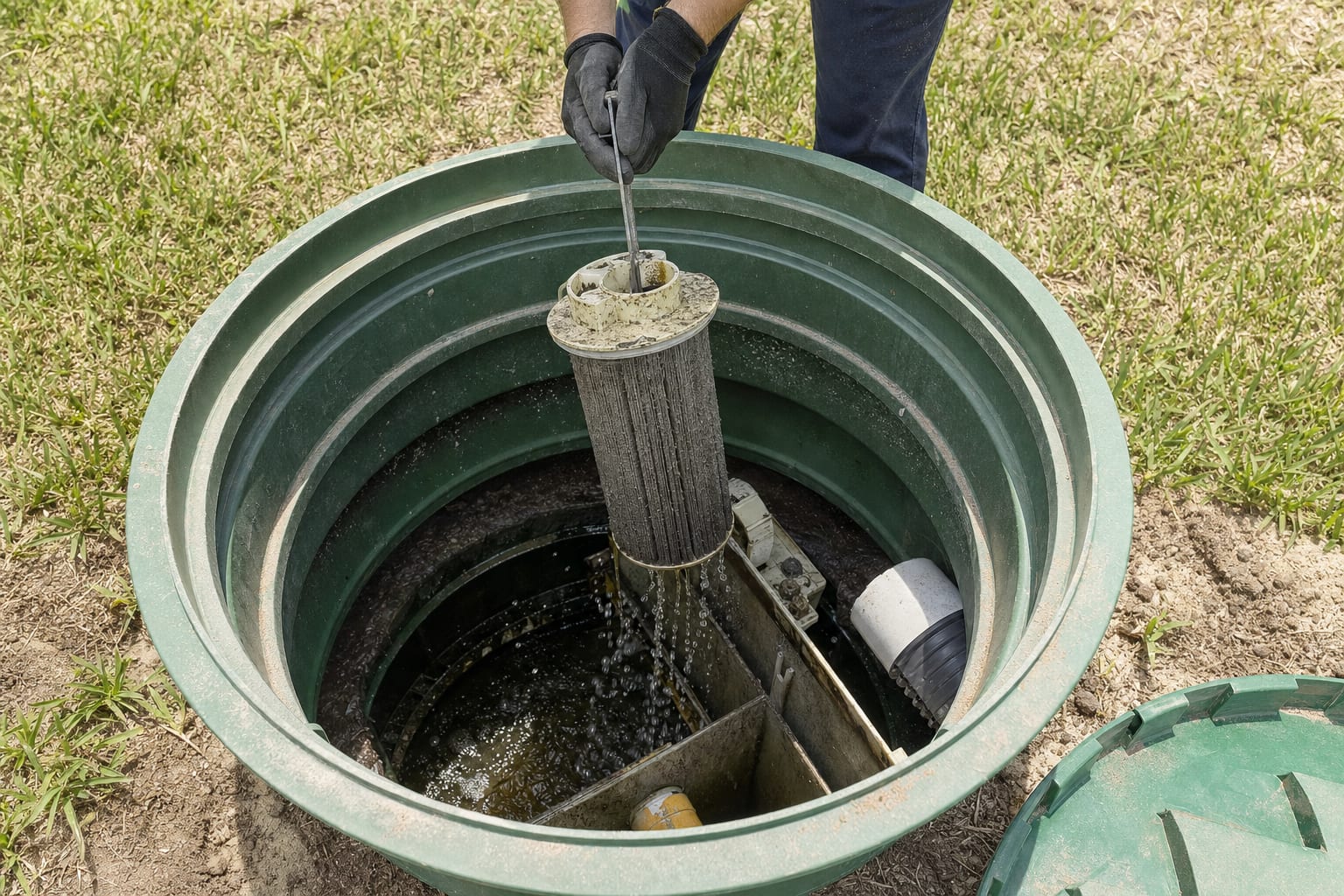
A useful inspection identifies tank access, inlet and outlet condition, solids, effluent filter, distribution method, pump chamber where present, alarms, visible absorption area, and signs of discharge or hydraulic stress. The inspector should distinguish items not found, not accessible, or outside scope from items actually observed.
- Treatment tank and each reachable compartment.
- Gravity distribution box, dosing siphon, or mechanical pump arrangement.
- Surface grade, runoff, vehicle traffic, vegetation, and wet areas over the field.
- Municipal pumping compliance and open repair notices when records are available.
PSMA and regulatory inspections are different
Pennsylvania has no government-set method for private on-lot condition inspections. PSMA/NOF provides an industry standard and trains inspectors to apply it. Only a currently certified inspector may represent work as a PSMA/NOF inspection. Ask to see current certification and confirm that the complete current standard will be followed.
The township SEO serves a regulatory role under Act 537. An SEO determines permits and municipal malfunction enforcement; a private condition inspector reports findings. A private report does not amend the permit or authorize a repair, and an SEO visit does not automatically provide the broader transaction analysis a buyer expected.
Weather can change the evidence
Saturated soil, snow cover, drought, recent pumping, and vacant-house water use can limit conclusions. Lancaster karst settings can move groundwater through fractures, while other properties rely on slowly accepting soils and elevated mounds. A report should state conditions and limitations instead of forcing certainty from an unrepresentative day.
If sewage is surfacing or backing indoors, the job becomes health and repair triage. Stop water use and keep people away from exposed wastewater. The inspection record should support the next municipal step, not delay it.
When a basic inspection is enough
A homeowner deciding whether routine pumping is due may need solids measurement, accessible component observations, and a clear maintenance record rather than a transaction package. Do not buy a branded inspection merely because the name sounds official. Match the scope to the decision, then require a written report that identifies what was and was not examined.
Official references used for this page
Rules and contacts can change. These primary sources supported the statements above; check the current municipal record for the property before relying on a deadline or form.