
A tank is not clean because the liquid level dropped. Scum floats, sludge compacts on the floor, and multiple compartments can hide material from a hose placed through the wrong opening. Lancaster service should use the main manhole access, remove accumulated material, observe reachable components, and produce the record required by the property’s municipality.
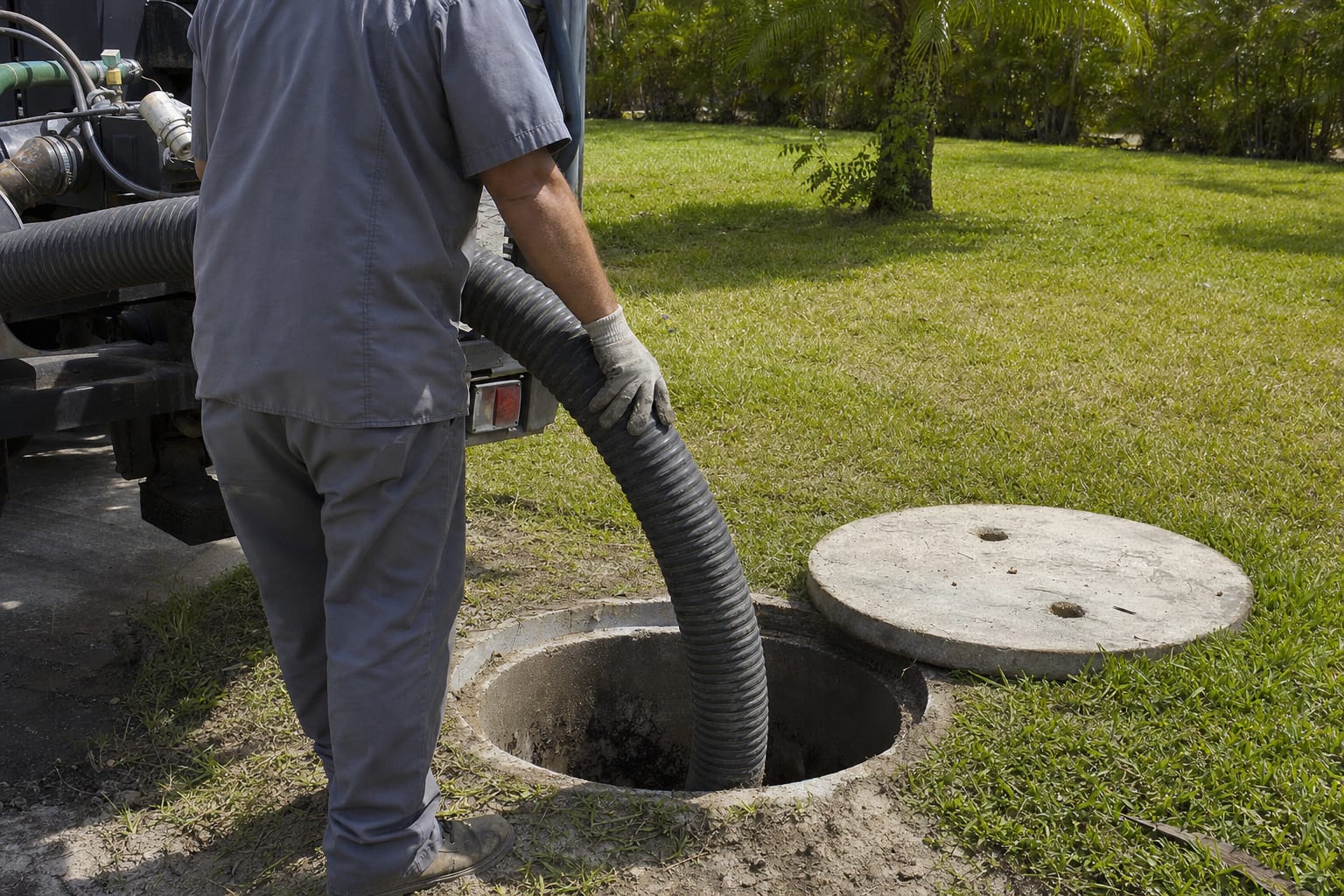
What a complete pump-out removes
Wastewater separates into a floating scum layer, a liquid middle zone, and settled sludge. The tank protects the absorption area by holding the top and bottom layers back. Service mixes resistant material into pumpable form and removes it through the large access. Penn State specifically warns against pumping through small baffle inspection ports because the approach can damage components and leave solids behind.
Two-compartment tanks need access to both chambers. Systems with a pump or dosing tank may require that chamber to be emptied and observed as well, especially where a township form asks about every associated tank. The quote should name what is included rather than use “cleaning” as an undefined label.
Useful observations while the tank is open
The empty tank offers a brief view of inlet and outlet baffles, partition condition, unusual infiltration, cracks visible from the opening, filter condition, and liquid returning from the field. These are observations, not a municipal approval. A pumper should record concerns and explain whether a separate repair inspection is warranted.
- Measure and report solids when the municipal form requests it.
- Clean the outlet filter without sending debris into the field.
- Confirm that lids and risers can be closed securely after service.
- Note groundwater or backflow entering the tank after removal.
Access changes the job
A lid at grade is faster and less disruptive than a buried tank with no reliable sketch. Locating may begin with the building sewer and permit plan, then use probing or electronic equipment where needed. Long hose runs, fences, soft lanes, and overhead branches affect truck placement. Share those conditions during scheduling, especially on farm lanes and older rural parcels.
A riser can reduce repeat digging when its installation and secure lid suit the system. It should not create a surface-water entry path. Ask whether the riser is a separate repair item, what lid is used, and whether municipal review applies.
Additives do not remove stored solids
Penn State does not recommend septic additives as a substitute for pumping. Bacteria already operate in the tank, but not every solid decomposes. Material that remains must leave in a vacuum truck before it reaches the outlet and burdens the absorption soil. A product poured into a drain cannot document township compliance or remove grit from the tank floor.
After service, return to normal water use unless the crew identifies a downstream problem. Keep the receipt and municipal report with the property file. Automatic reminders are helpful, but the owner remains responsible for the township due date.
Where the material goes
Pennsylvania allows delivery to lawful receiving facilities and tightly controlled beneficial use under DEP authorization. Land application requires the applicable permit, treatment, site controls, records, and trained personnel. The transporter registration number on the truck helps identify the business, but it does not turn an unapproved field into a disposal location.
Official references used for this page
Rules and contacts can change. These primary sources supported the statements above; check the current municipal record for the property before relying on a deadline or form.