
A red light or buzzer says the liquid reached an alarm level. It does not identify whether the pump, float, power supply, control, discharge pipe, or downstream system caused it. Lancaster County mounds and pressure-dosed fields often depend on a pump chamber; some sewered properties use grinder units. Correct routing starts by identifying which system the alarm serves.
Reduce flow and preserve evidence
Silence the audible buzzer if the panel provides a silence control, but leave the alarm light and system power arrangement as instructed by the manufacturer. Stop laundry, long showers, and dishwashing. Repeatedly toggling breakers or lifting floats can create electrical and contamination hazards and can erase useful clues.
Tell the technician whether the pump runs continuously, never runs, trips a breaker, hums, or cycles rapidly. Note recent storms, outage history, and whether sewage has reached the house or ground surface. Keep people away from the basin and never enter it.
A controlled diagnostic sequence
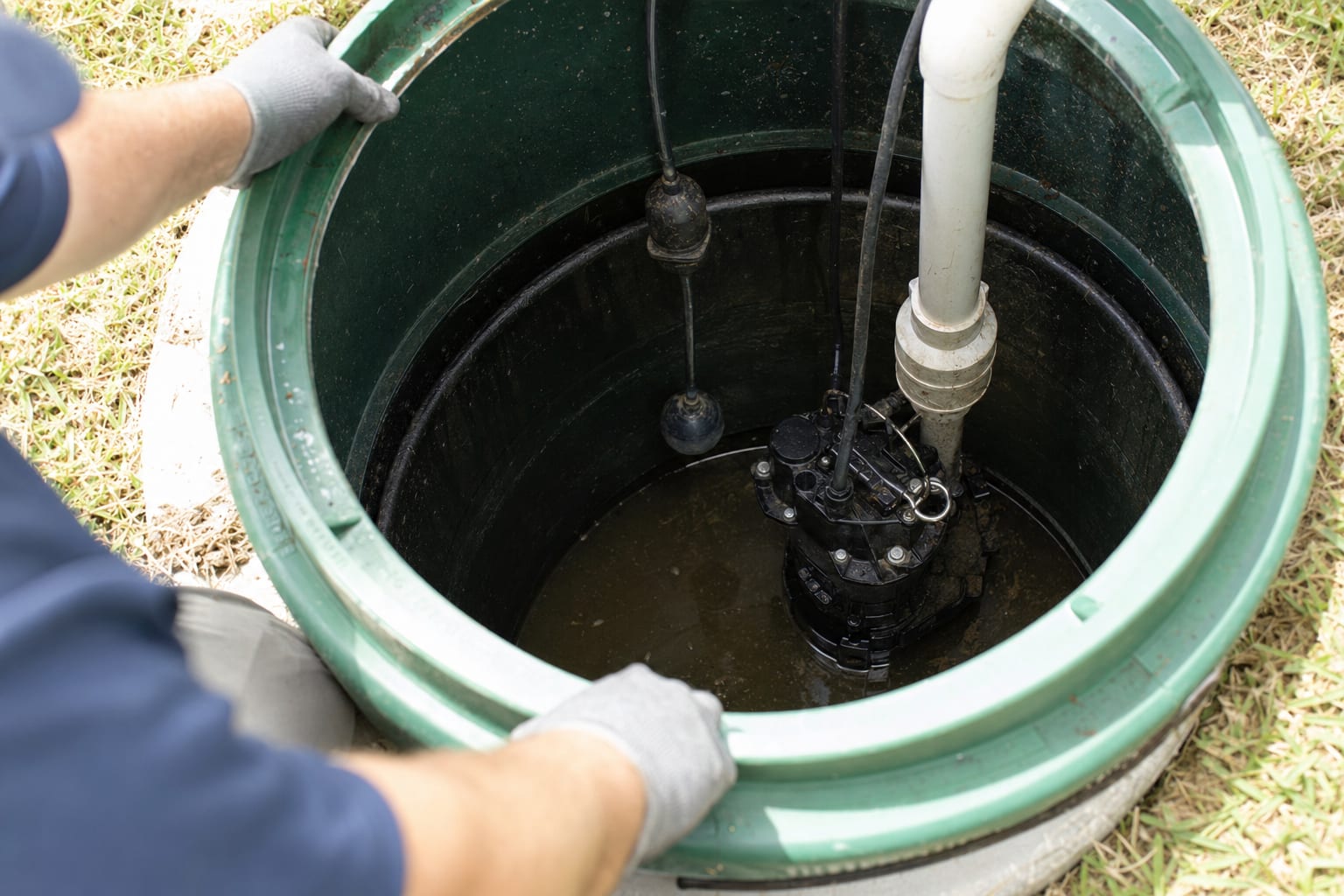
Inspection begins with safe power verification, panel condition, alarm and pump floats, liquid level, accessible connections, and discharge behavior. A tangled float can imitate pump failure. A blocked line can overload a good pump. A failed check valve can send discharged water back into the basin. Each cause produces a different repair.
Where the pump doses an elevated field, downstream saturation or distribution trouble can also raise levels. Pump replacement without checking discharge conditions risks putting a new motor into the same failure pattern.
Emergency storage is limited
The volume between the alarm float and overflow buys some response time, not permission for normal household use. A vacuum pump-out can create temporary storage while parts or electrical service are arranged. The service order should state whether tank pumping, pump diagnosis, replacement, electrical work, and field evaluation are separate tasks.
- Keep the panel model and pump information available if known.
- Describe basin access, lid condition, gates, and soft ground.
- Ask whether the technician handles both mechanical and electrical scope.
- Retest alarms and automatic operation before returning to full water use.
Grinder pumps and septic dosing pumps are not interchangeable
A grinder unit may send sewage from a building to a public pressure sewer. A septic effluent pump moves clarified liquid from a dosing chamber toward an absorption area. Controls, solids handling, head requirements, and municipal ownership rules differ. Confirm the destination before ordering a part.
Warwick’s municipal authority notes that property owners maintain many grinder systems connected to its sewer network. That is a sewer equipment issue, even though the alarm panel may resemble a septic setup. The utility can clarify ownership and program-specific support.
When not to replace the pump
Do not replace a motor solely because the high-water light is on. Check power, floats, controls, obstructions, discharge, and downstream conditions. Local primary sources did not support a dependable Lancaster pump-price band, so require a model-specific written quote that separates equipment, labor, pumping, electrical work, and restoration.
Official references used for this page
Rules and contacts can change. These primary sources supported the statements above; check the current municipal record for the property before relying on a deadline or form.